How to Buy a Full PA System in Kenya (Without Overpaying or Underpowering)
A straight-talking guide to putting together a full public address system — from a church hall in Nairobi to a live event under a tent — covering what each component actually does, how to size a rig to your venue, and what to watch for buying gear locally.
Who this guide is for
- Churches — clear vocals across 200–600 seats, low feedback, all-day reliability.
- Live bands and MCs — full-range coverage plus stage monitoring for performers.
- Event hire companies — a rig that travels, sets up fast, and survives a season of gigs.
- Schools and halls — announcements, assemblies and the odd concert, durability over flash.
1. What a "full sound system" actually contains
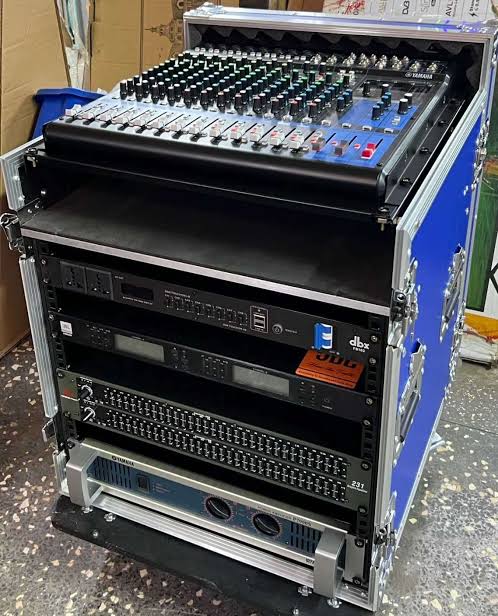
People often ask for "a PA system" expecting one box. In practice it's five categories of gear working together — miss one and the rest underperforms.
Mixer
Where every input lands. Mics, instruments and a laptop or DJ player all plug into the mixer, which blends them into one signal and sends it onward. Channel count should match how many sources you'll realistically run at once — a 16-channel desk like the Yamaha MG16XU covers a full worship team or small band with room to grow.
Processing (EQ and crossover)
A graphic EQ tames feedback and room resonance; a crossover splits the mix so bass goes only to the sub and highs go only to the tops. Skipping this stage means your speakers work harder and wear out faster.
Power amplifiers
What actually drives the speakers. Passive speakers (the kind without their own built-in amp) need external power amps sized to match — undersized amps clip and damage speakers faster than oversized ones ever will.
Power sequencer
An often-skipped box that turns your rack on in the right order and shields the rest of the gear from Kenya's mains voltage swings — cheap insurance against a very expensive repair.
Speakers
Tops for vocals and instruments, a sub for bass, monitors for the stage. This is the part your audience actually hears — and the one component category where it rarely pays to cut corners.
2. Size the rig to your room first
The single biggest buying mistake is matching budget to speakers rather than speakers to venue. Work out your typical audience size before you shop.
- Small — under 150 people: a single top and a compact sub is usually enough.
- Medium — 150 to 500 people: the build below (2 tops, 1 sub, 2 monitors) is sized for this range.
- Large — 500 to 1,500 people: add a second pair of tops and a second sub.
- Festival — 1,500+ people: needs delay speakers and a dedicated system designer.
Two 15" tops and one 18" sub comfortably fill an indoor hall or a modest outdoor tent. Bigger outdoor crowds need more boxes, not louder ones — coverage matters more than raw output.
3. An example build — medium venue package
Here's a complete, ready-to-quote system sized for the medium zone above. Everything below is stocked at City Sounds.
| Role | Item | Why it's included | Link |
|---|---|---|---|
| Mixer | Yamaha MG16XU — 16-channel | Room for a full worship team, band, or MC + playback, with built-in FX. | View |
| Equalizer | dbx 215/131 Graphic EQ | Rings out room resonance and feedback before it ever reaches the amps. | View |
| Crossover | dbx 234 | Splits bass to the sub and mids/highs to the tops so neither strains. | View |
| Sequencer | 8-Channel Power Sequencer + LCD | Staggers power-up and flags voltage issues before they reach the amps. | View |
| Amp — tops | Crest Audio CA12 | Drives the two mid-range tops, one channel each. | View |
| Amp — sub | Morgan Sound 39.9 (Class H) | Bridged mono into the 18" sub for full, clean low end. | View |
| Tops ×2 | JBL SRX715 | 15" mid-range boxes carrying vocals and instruments to the back row. | View |
| Sub ×1 | EV Electro-Voice DS-118 | 18" driver for low end that's felt as much as heard. | View |
| Monitors ×2 | JBL SRX712M | 12" wedges so performers can hear themselves on stage. | View |
4. Buying in phases
Few buyers get the full budget approved at once. If you need to spread the purchase, buy in this order.
Phase 1 — get sound on
- Yamaha MG16XU mixer
- Crest Audio CA12 amp
- 2× JBL SRX715 tops
Phase 2 — protect it
- dbx 215 graphic EQ
- dbx 234 crossover
- 8-channel power sequencer
Phase 3 — fill it out
- Morgan 39.9 amp + EV DS-118 sub
- 2× JBL SRX712M monitors
Buying the sub and processing last isn't cutting corners — it just means Phase 1 already sounds correct, and Phase 2–3 make it sound bigger and last longer.
5. Buying locally in Kenya — what to watch for
- Match amp power to speaker power, not the other way round. An amp that's slightly too big and turned down sensibly is safer than an undersized amp pushed to its limit — clipping kills drivers faster than headroom ever will.
- Budget for the sequencer. Nairobi's mains voltage isn't always stable. An 8-channel sequencer with a voltage display costs a fraction of a replacement amp or driver.
- Buy from a dealer who'll still answer the phone next year. Genuine JBL, EV, dbx and Crest Audio gear carries manufacturer warranties that only mean something if the seller is still around to honour them.
- Confirm delivery and setup, not just the price. A rack this size needs correct cabling and gain-staging on day one — ask whether delivery includes basic setup, especially for a first-time buyer.
6. Quick questions
Do I need both a graphic EQ and a crossover?
Yes, they do different jobs. The EQ shapes the tone and fights feedback across the full mix; the crossover splits that mix by frequency so the sub only gets bass and the tops only get mids and highs. Running a sub without a crossover is one of the fastest ways to blow a driver.
Can I skip the power sequencer to save money?
You can, but it's the cheapest piece of insurance in the whole rack. It protects every other box from power-on surges and mains fluctuation — the kind of fault that's invisible until the day it isn't.
How many speakers do I need for an outdoor event?
Outdoors, sound has nothing to bounce off, so coverage drops off faster than indoors. Past roughly 500 people outside, plan on adding a second pair of tops or delay speakers rather than just turning the existing pair up.
Is a Class H amplifier worth the extra cost?
For a sub in particular, yes — Class H gives more headroom for the low-frequency peaks a sub demands, without running as hot as a comparable Class AB amp at the same power.
City Sounds
Luthuli Avenue, Nairobi CBD · M-Pesa accepted · Free CBD delivery
citysounds.co.ke · +254 743 968 239