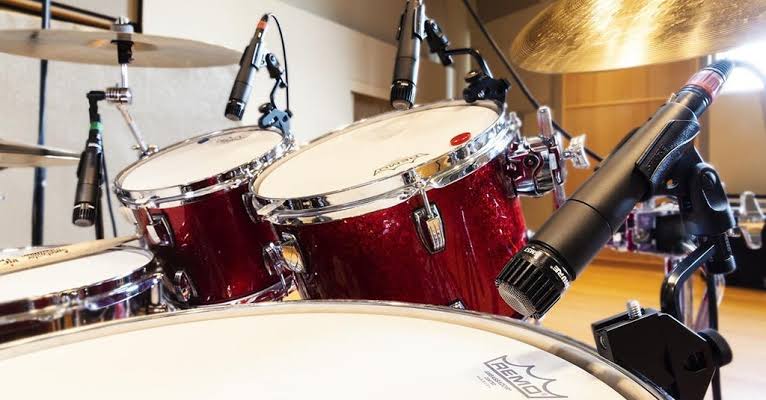
If there is one instrument that can make or break a live worship mix, it is the drum kit[span_0](end_span). A poorly miked drum set can sound like a wash of muddy cymbals or a weak, cardboard box, drowning out the pastor's vocals or clashing with the bass guitarist. For many church sound engineers in Kenya, capturing the true energy and dynamics of a live acoustic kit is their biggest weekly challenge.
At City Sounds, Nairobi’s #1 Music Store, we regularly help technical teams upgrade their stage sound. In this guide, we will break down exactly how to mic each piece of the drum kit to achieve a massive, polished mix that elevates your praise and worship sessions.
1. The Kick Drum: Getting the "Thump"
The kick drum is the heartbeat of your rhythm section. [span_1](start_span)Most kick drums are captured using a dynamic microphone with a frequency response specifically tailored to handle low-frequency power and high sound pressure levels[span_1](end_span). [span_2](start_span)Popular choices include the Shure Beta 52A, AKG D112, or the Audix D6[span_2](end_span).[span_3](start_span)
Placement is crucial for the kick:
- For Attack (The "Click"): Placing the microphone inside the drum, pointed directly at the beater, will capture a sharp, distinct attack[span_3](end_span).[span_4](start_span)
- For Low-End (The "Boom"): Positioning the mic further back or placing it just outside the resonant head hole will emphasize the boomy bass frequencies[span_4](end_span).[span_5](start_span)
- The Best of Both Worlds: Many professional engineers use two mics—one boundary mic resting inside on a pillow to capture the attack, and a larger dynamic or condenser mic on a short boom stand just outside the hole to capture the weight[span_5](end_span).
2. The Snare Drum: Capturing the Crack
The snare is the centerpiece of the groove. [span_6](start_span)The industry-standard workhorse for this job is the Shure SM57[span_6](end_span).[span_7](start_span)
To mic the top of the snare, place the microphone about an inch and a half above the head, two inches inside the rim, and angle it down pointing at the center where the drummer strikes the stick[span_7](end_span). This captures the sharpest impact. [span_8](start_span)If you want more of the signature "rattle," you can add a second microphone underneath the snare drum pointing up at the metal snare wires[span_8](end_span). [span_9](start_span)Just remember to reverse the polarity (phase) of the bottom microphone on your mixing console, as the top and bottom heads move in opposite directions[span_9](end_span).
3. The Toms: Depth and Resonance
Toms add melodic depth to drum fills. [span_10](start_span)Like the snare, dynamic microphones like the Sennheiser e604 (which clips easily onto rims) or the classic Sennheiser MD 421 work exceptionally well[span_10](end_span).[span_11](start_span)
Point the microphone closer to the rim for a higher-pitched attack, or aim it more toward the center of the drumhead to generate a heavier, boomy sound with more volume[span_11](end_span). [span_12](start_span)Take advantage of the "proximity effect"—the closer the cardioid microphone is to the head, the more free low-end fatness you will get[span_12](end_span).
4. Overheads: The "Glue" of the Kit
Overhead microphones capture the cymbals, but more importantly, they capture the entire cohesive sound of the drum kit in the room. [span_13](start_span)For this, you need sensitive condenser microphones[span_13](end_span).[span_14](start_span)
A major secret to a clean drum mix is phase alignment[span_14](end_span). [span_15](start_span)If the sound of the snare drum reaches your left overhead mic slightly before it reaches your right overhead mic, it will create "phase cancellation," making the snare sound thin and weak[span_15](end_span). [span_16](start_span)To fix this, use a tape measure or microphone cable to ensure your left and right overhead microphones are precisely the same distance away from the center of the snare drum[span_16](end_span).
Elevate Your Live Mix Today
Miking a drum kit takes practice, but starting with the right tools makes all the difference. Whether your church needs a full set of premium drum mics, specialized boom stands, or a new digital mixer to process it all, we have you covered.
Need to upgrade your church's live drum sound? Visit the City Sounds showroom in the Nairobi CBD today. Our experienced audio technicians can help you piece together the perfect drum microphone bundle tailored specifically for your sanctuary's acoustics and budget.
Call or WhatsApp City Sounds at: 0743968239
Nairobi's #1 Music Store — Bringing Sound to Life!