Demystifying Audio Connectors: A Comprehensive Guide
If you've ever looked at the back of an audio mixer or a home theater receiver, you might have felt overwhelmed by the sheer number of inputs and outputs. Understanding which cable does what is the first step to mastering your sound setup.
This guide uses information referenced from the following file: Screenshot_2026-08-24-17-05-38-22_50ef9f5a0f3fc24b6f0ffc8843167fe4.jpg.
Common Audio Connectors and Their Uses
Below is a breakdown of standard audio connections, translated from standard industry charts, to help you identify the right cable for the job:
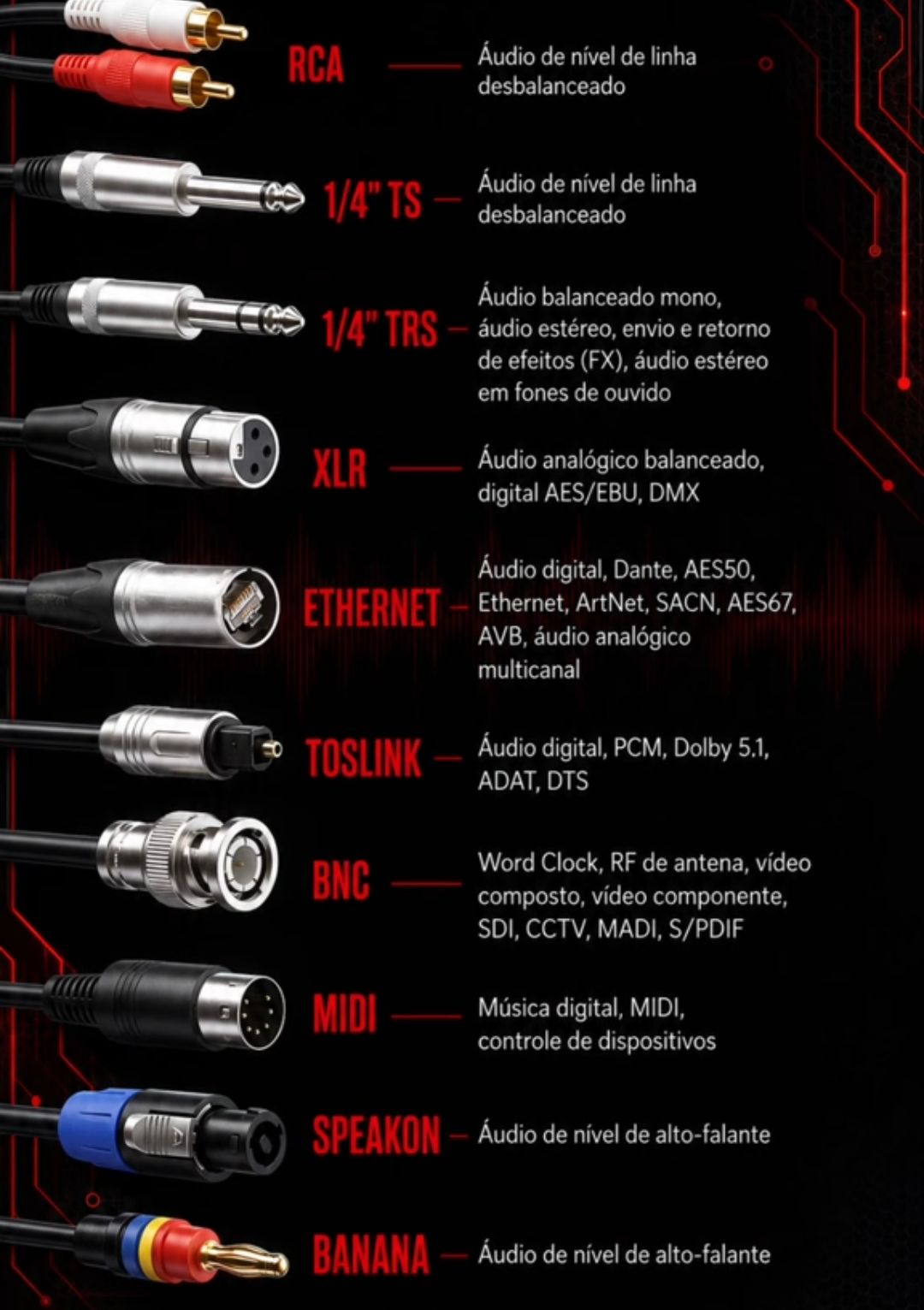
| Connector Type | Primary Uses |
|---|---|
| RCA | Unbalanced line-level audio (Common in consumer electronics like DJ gear and home theaters). |
| 1/4" TS | Unbalanced line-level audio (Standard instrument cables for guitars and keyboards). |
| 1/4" TRS | Balanced mono audio, stereo audio, effects (FX) send/return, and stereo headphone audio. |
| XLR | Balanced analog audio (standard for microphones), digital AES/EBU, and DMX lighting control. |
| ETHERNET | Digital audio networking (Dante, AES50, ArtNet, SACN, AES67, AVB) and multichannel analog audio. |
| TOSLINK | Digital optical audio, including PCM, Dolby 5.1, ADAT, and DTS formats. |
| BNC | Word Clock sync, RF antenna feeds, video formats (composite, component, SDI, CCTV), MADI, and S/PDIF. |
| MIDI | Digital music data transmission and device control (e.g., connecting a keyboard to a synthesizer). |
| SPEAKON | Speaker-level audio (Used in professional PA systems and amplifiers to handle high currents). |
| BANANA | Speaker-level audio (Often found on consumer hi-fi amplifiers and passive speakers). |
Conclusion
Choosing the correct connector is crucial for maintaining audio fidelity and preventing equipment damage. Always ensure you are matching the correct signal type (e.g., mic level, line level, or speaker level) to the corresponding cable.