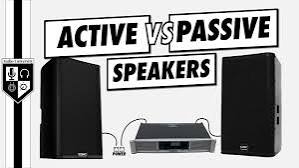
When shopping for professional sound reinforcement gear in Nairobi, one of the first major decisions you will face is choosing between Active (Powered) and Passive (Unpowered) PA speakers. Getting this wrong can mean overspending on gear you do not need, or worse, ending up with a system that lacks the power and flexibility required for your specific events.
At City Sounds, we want to ensure you get the absolute best value for your money. Let's lift the hood on both technologies so you can confidently choose the right system for your setup.
What Are Active PA Speakers?
Active speakers—commonly referred to as powered speakers—feature a built-in amplifier tailored precisely to the drivers inside the cabinet. All they need to function is a line-level audio signal (from a mixer or phone) and a direct connection to a power outlet.
The Pros:
- All-in-One Convenience: You do not need to carry heavy external amplifier racks. This makes your setup incredibly compact and fast to deploy.
- Component Protection: Because the internal amplifier is engineered specifically for that speaker, it features built-in limiters that prevent you from accidentally blowing the drivers.
- Plug-and-Play Simplicity: Perfect for small gigs, mobile DJs, corporate presentations, and roadshows where speed is everything.
The Cons:
- Power Management Hurdles: Every single speaker requires its own power cable. If you are mounting a speaker high up on a stand, you will have to run both an audio cable and a heavy extension cord up to it.
- Weight: Because the heavy transformer and amplifier modules are inside the cabinet, active speakers can be physically heavier to lift onto tripods.
What Are Passive PA Speakers?
Passive speakers do not have internal amplification. They require external power amplifiers to send them a boosted signal through specialized speaker cables (usually NL4 Speakon connectors). Legendary tour-grade models like the JBL SRX715 and Electro-Voice ELX215 are classic examples of high-performance passive cabinets.
The Pros:
- Lighter Cabinets: Without built-in amplifiers, passive speakers are significantly lighter and easier to hang, truss-mount, or lift onto high speaker poles.
- Centralized Control: Your amplifiers sit together safely in a single rack next to your mixing console. If a speaker stops working, you can troubleshoot the amp and connections immediately without climbing up to the stage arrays.
- Easy Upgrades and Scalability: If you want more power in the future, you can simply upgrade your power amplifiers without needing to buy an entirely new set of speakers.
The Cons:
- Matching Technical Specs: You must carefully match the amplifier's wattage and impedance (Ohms) to the speakers. Connecting a passive speaker to an incorrect or underpowered amp can permanently damage your gear.
- More Gear to Carry: You will need to budget for, transport, and wire up external amplifiers, crossovers, and thick speaker cables.
Which One Should You Choose?
The right choice ultimately depends on how and where you plan to use the system:
Choose Active Speakers if: You are a mobile DJ, a solo performer, a fitness instructor, or a corporate event planner who values fast setups, portability, and minimal cabling. They are ideal for quick, plug-and-play gigs around town.
Choose Passive Speakers if: You are setting up a permanent installation for a church, a large nightclub, or an outdoor crusade rig. If your system is going to be handled by sound engineers who want total control over their tuning, or if your speakers are going to be permanently mounted high up where running individual power lines is impractical, passive is the professional standard.
Conclusion
There is no single "better" option—only the option that fits your workflow and event size. Active speakers offer unparalleled convenience for moving fast, while passive speakers provide the raw scalability and component flexibility that large venues require.
Still torn between active and passive? Pay a visit to the City Sounds showroom in the Nairobi CBD. Our team can give you a live demonstration of both setups, helping you map out an audio solution that delivers pristine clarity and massive power within your budget.